Strategus
Brand refresh and Webflow migration for programmatic advertising
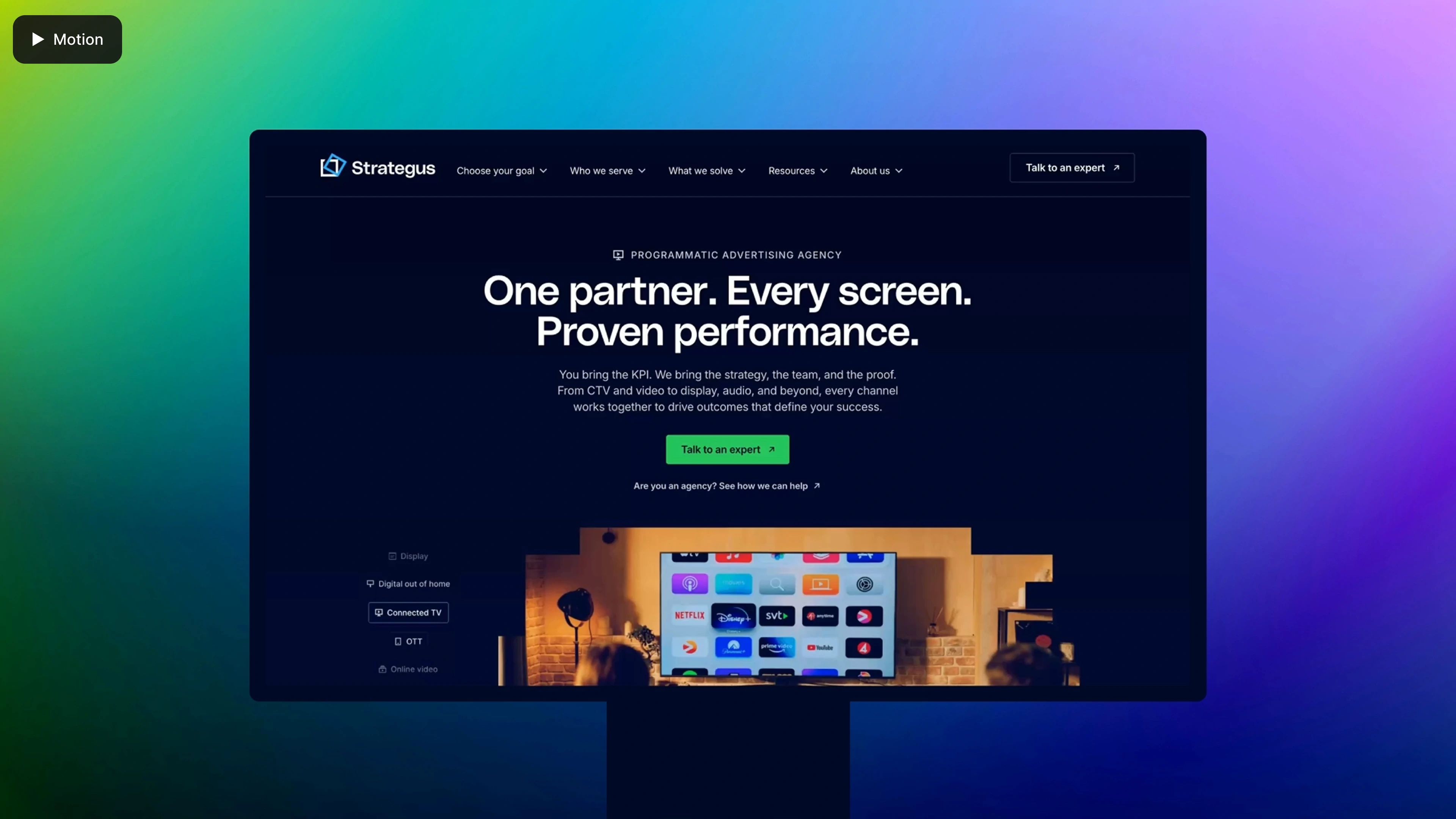
A programmatic advertising agency had grown into an established operator, but its brand and HubSpot site still felt like a challenger's. Paper Tiger refined the logo, built a new brand around the pixel, and moved 500+ pages into a Webflow system that a two-person team can run.
Next project:
Arch

THE PUZZLE
Strategus got very good at connected TV, then kept going: online video, display, streaming audio, digital out-of-home, and 60,000+ campaigns for everyone from car brands to the local deck builder. After an acquisition in early 2025, the business grew fast. The brand didn't. It still read like a challenger hoping to get noticed, while it sat across the table from peers like StackAdapt and MiQ. The palette was so blue-heavy that nothing could stand out. Its light blue was too harsh, its gray fought everything, and clip-art icons and stock-looking photos finished the job. Ad tech brands also tend to look like software, and Strategus is a team of people who plan and run campaigns, with the technology behind them.
The website made it harder. It lived on HubSpot and had grown one page at a time, with every new page another round of wrestling the modules. One person kept it all moving. Strategus needed to look as established as it already was, keep the squares it had built recognition on, and give that one person a site they could actually grow. The test was simple: would a buyer trust one partner with every screen?
THE SOLUTION
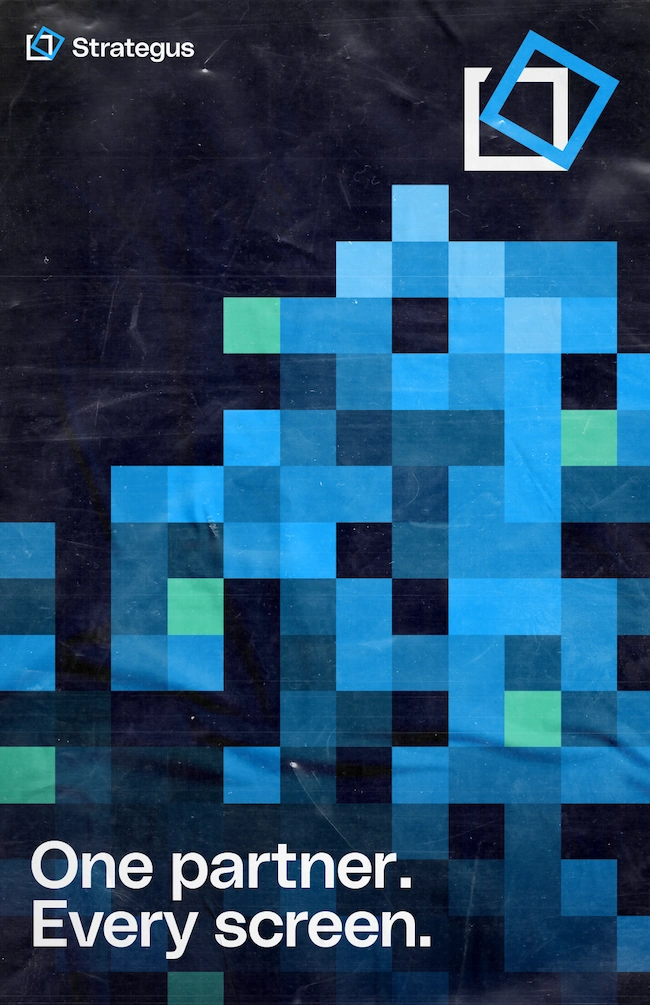
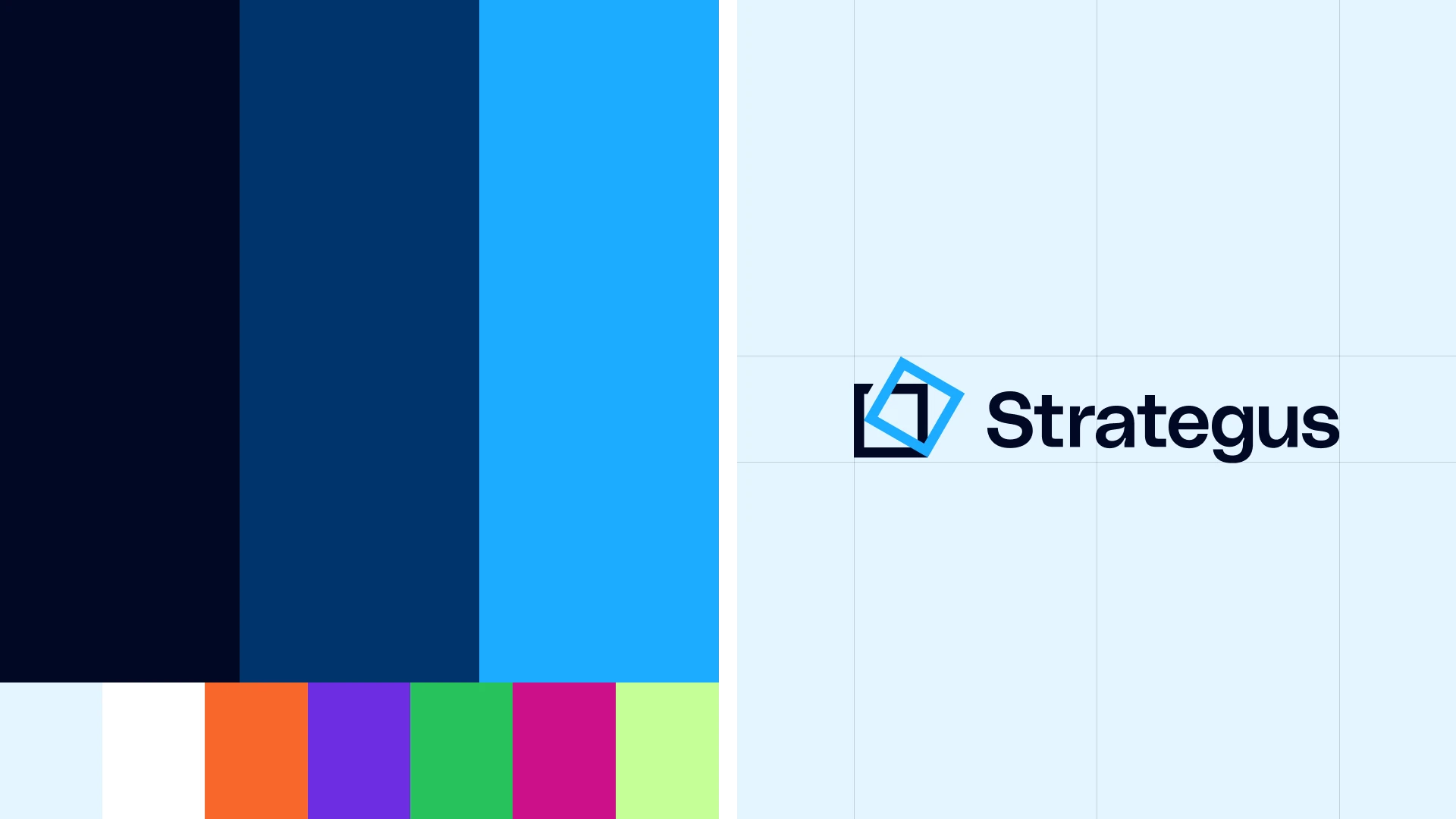
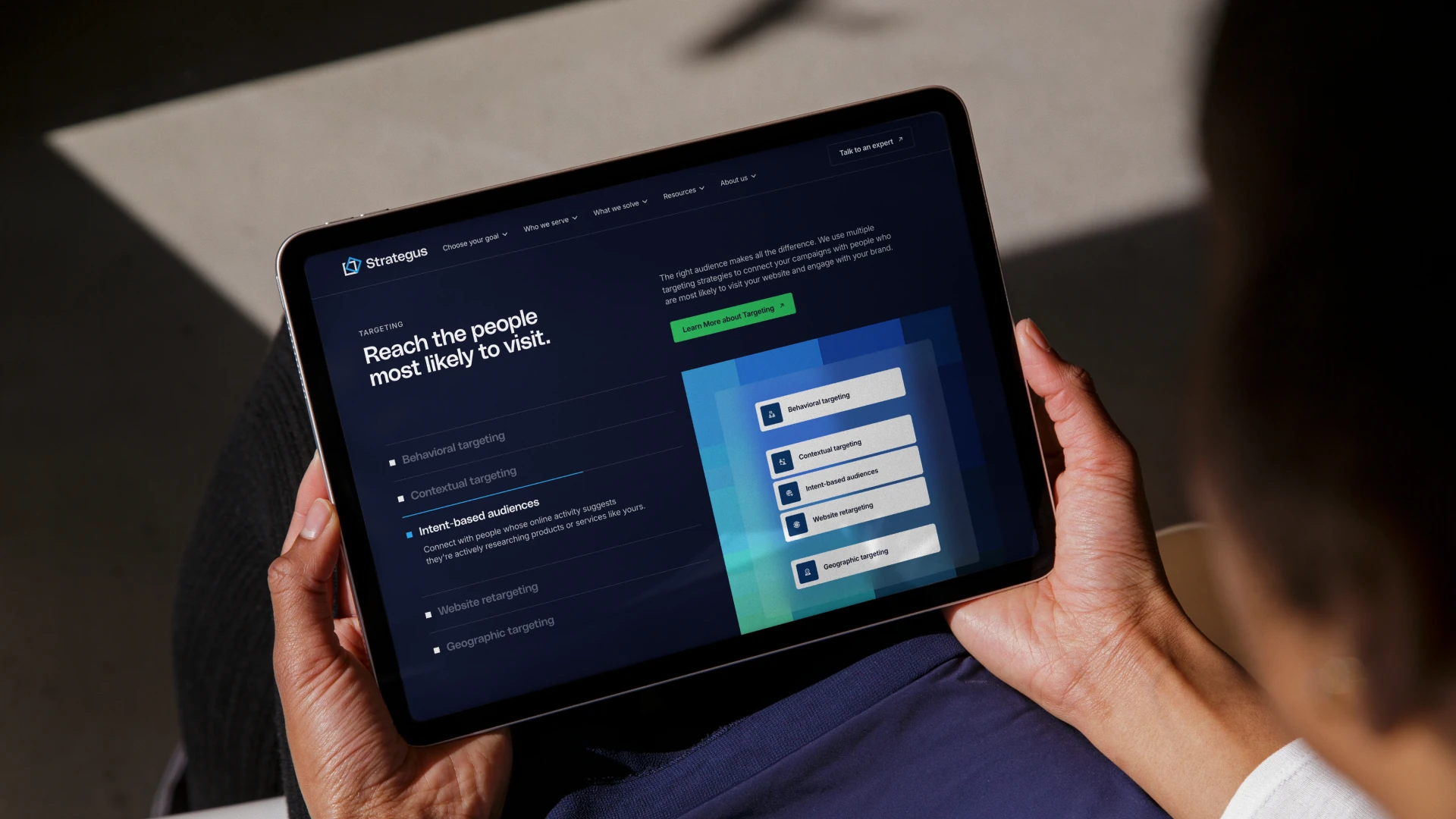
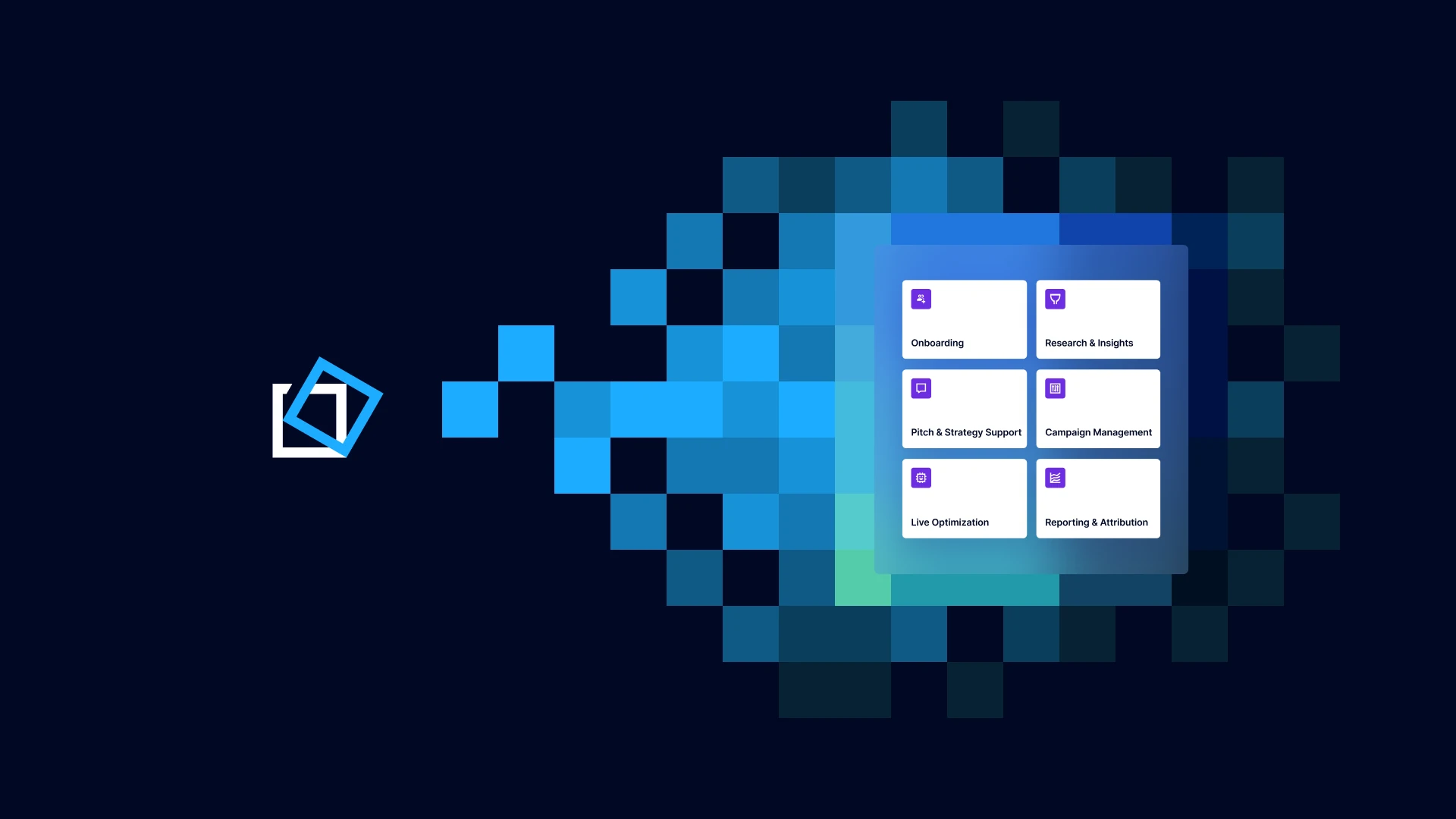
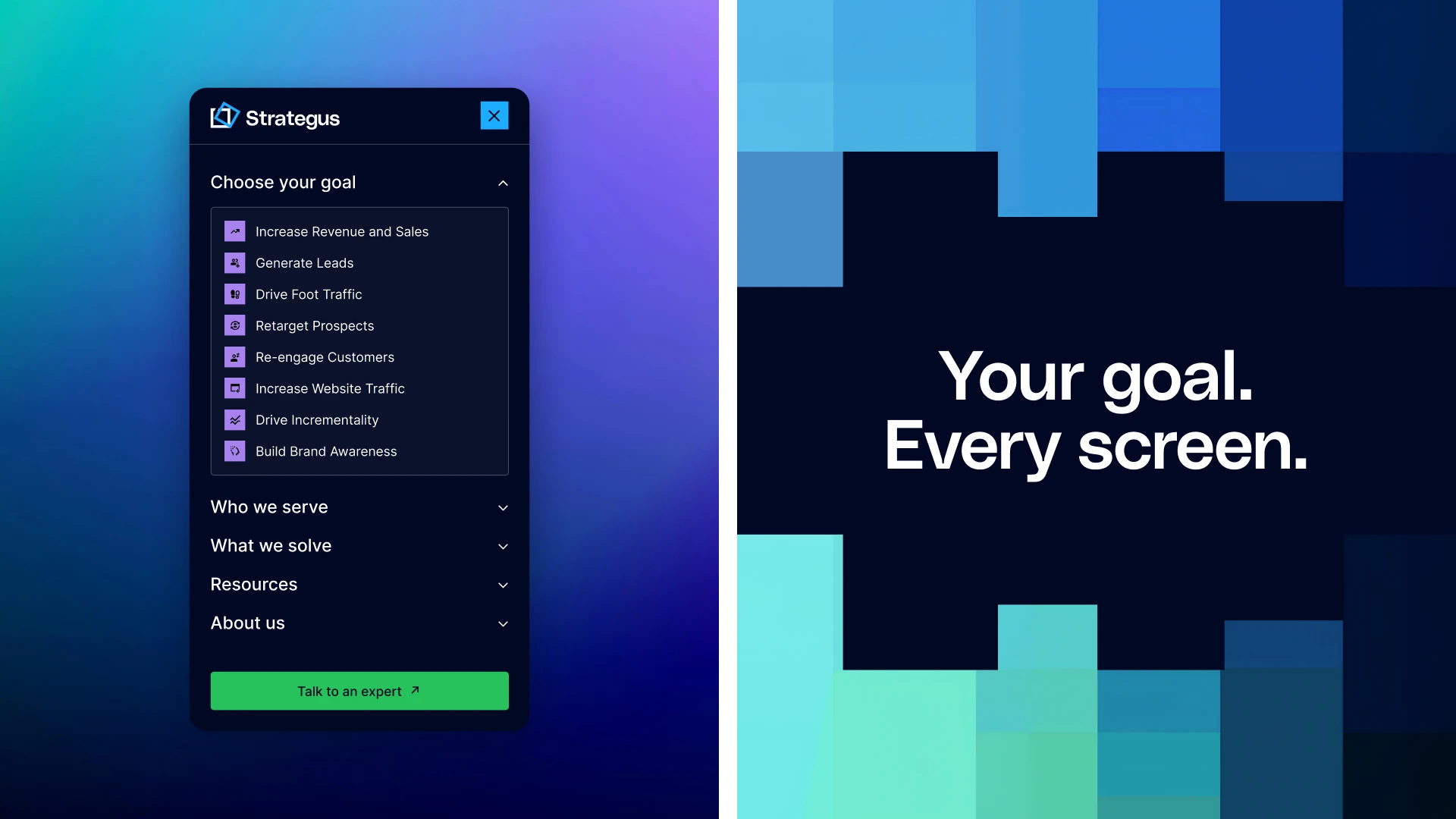
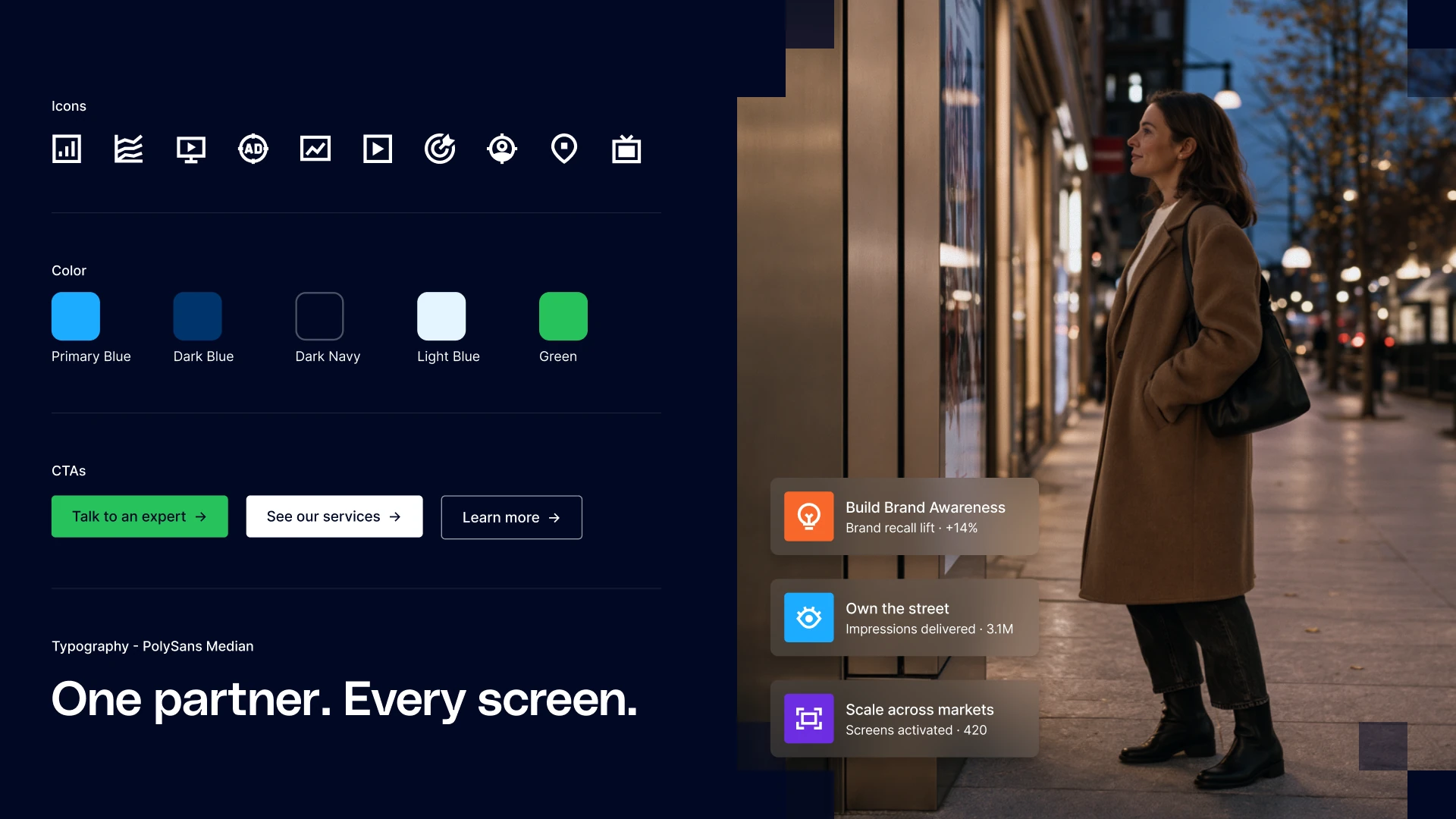
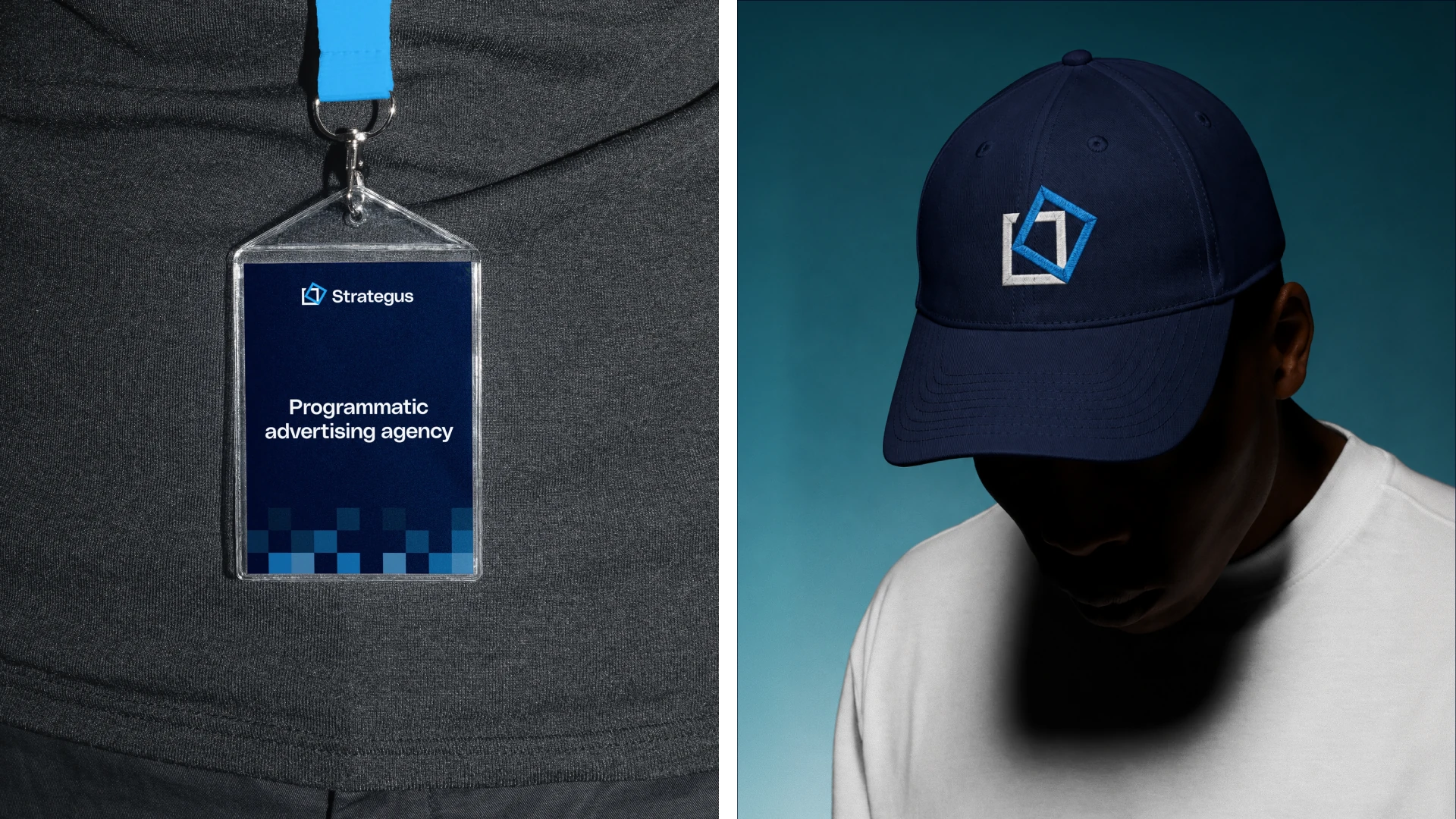
We kept Strategus's overlapping squares, refined the wordmark, and then made the square the hero of the whole system. It's a pixel, the unit every screen is made of, and a nod to the code Strategus places to measure what works. A navy-led core picks up pink, orange, green, and purple accents from TV test bars, which gives a cold palette some warmth, and a pixel pattern carries the brand onto every surface. Ad tech usually illustrates itself with abstract data visuals. We showed the person the ad reaches instead: the light of a screen on someone's face. The offer is told as one person's day, from the ad she passes on the street, to the phone in her hand at home, to the line in the results report. More than 30 pieces of custom visual content replaced the stock, and Strategus got the tools to keep making new ones after we left.
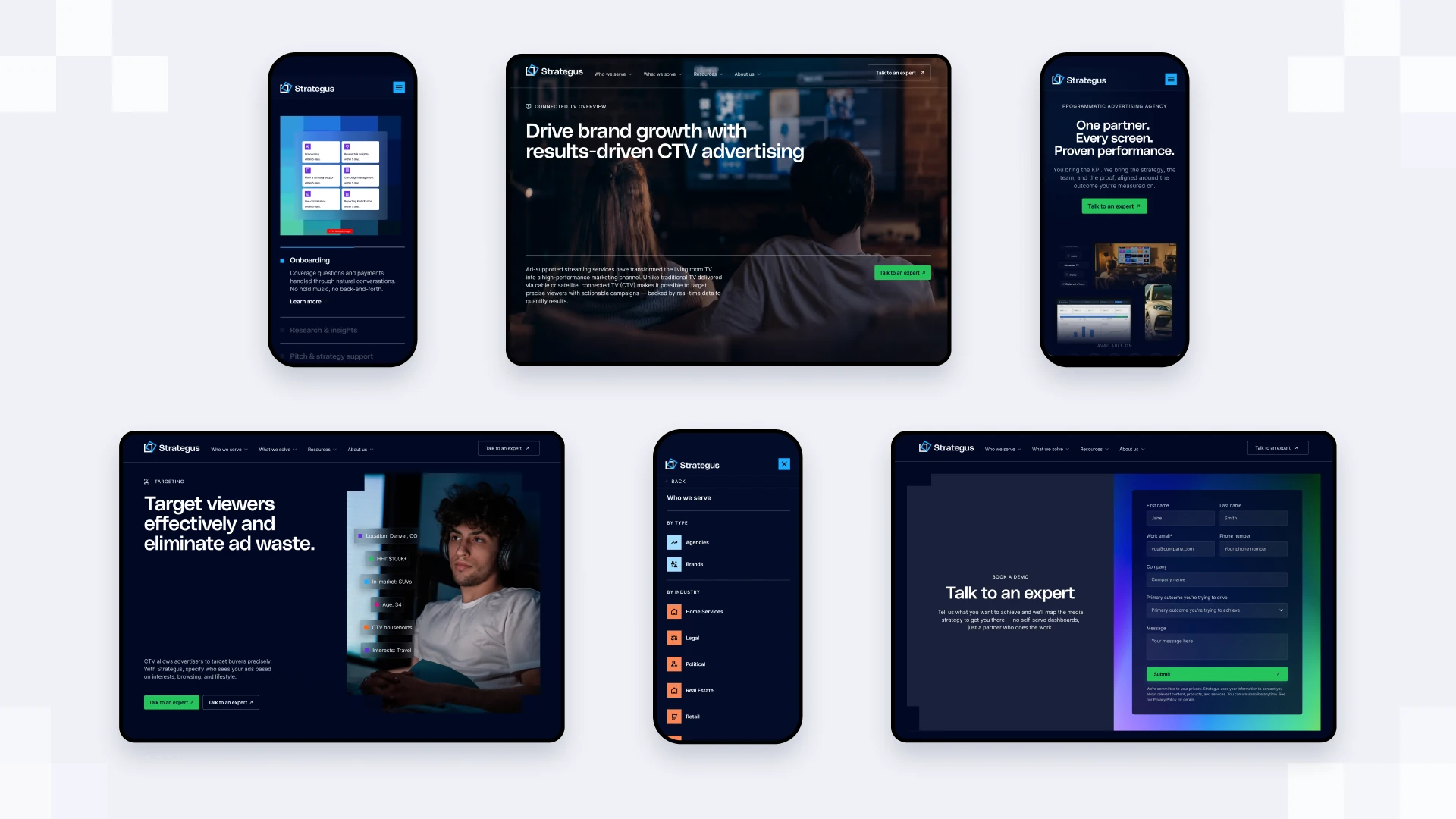
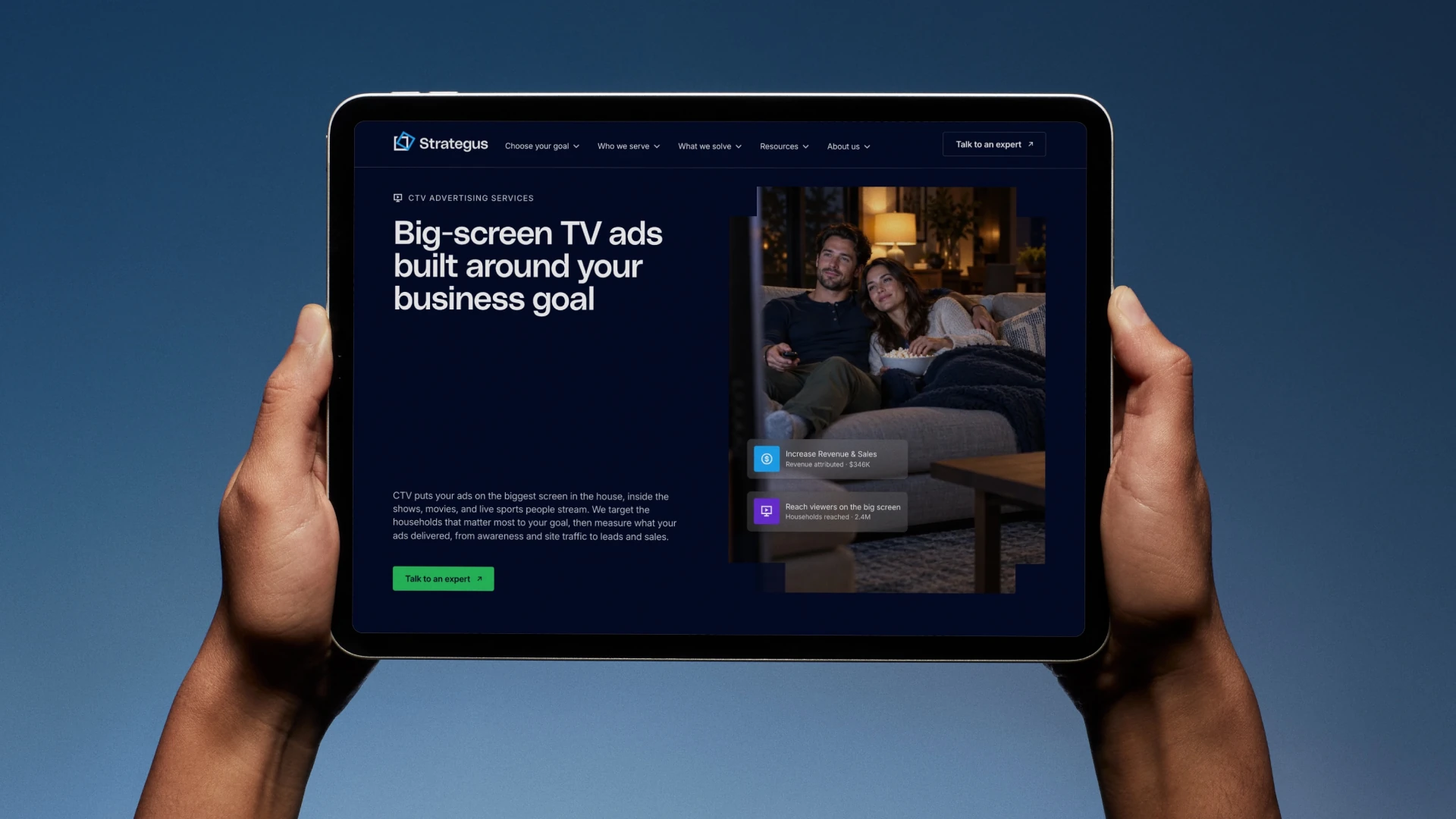
We rebuilt the site in Webflow using a large component library, with a template for every kind of page a buyer looks for. The sitemap is organized around three questions: what do I want to achieve, is this for me, and how does it work? More than 500 pages moved over from HubSpot on that system, covering 13 industries, 8 outcomes, 6 media channels, 8 capabilities, about 250 blog posts, and 68 case studies. Each channel, from CTV to DOOH, has its own template, and HubSpot forms stayed connected for lead capture.
THE IMPACT
Strategus launched the new brand and site on October 11, 2026. It's too early for measured results, but the first proof is already here. Its two-person marketing team runs the site itself, building and updating pages without a developer, and it has carried the brand into its own work, from newsroom images to sales decks and reporting dashboards.
The bigger change is how Strategus shows up in a pitch. A buyer deciding whether to trust one partner with every screen now meets a company that looks as established as it is, with standout color and its own imagery. That's the difference between being the interesting option and being the obvious one.
Strategus
Brand refresh and Webflow migration for programmatic advertising
PAPER TIGER
- Zoey Russomano
- Mirko Santangelo
- Jason Debiak
- Leonardo Mattar
- Arthur Nurgaliyev
- Webflow
- GSAP
- Figma Motion
- Lenis
- HubSpot
THE PUZZLE
Strategus got very good at connected TV, then kept going: online video, display, streaming audio, digital out-of-home, and 60,000+ campaigns for everyone from car brands to the local deck builder. After an acquisition in early 2025, the business grew fast. The brand didn't. It still read like a challenger hoping to get noticed, while it sat across the table from peers like StackAdapt and MiQ. The palette was so blue-heavy that nothing could stand out. Its light blue was too harsh, its gray fought everything, and clip-art icons and stock-looking photos finished the job. Ad tech brands also tend to look like software, and Strategus is a team of people who plan and run campaigns, with the technology behind them.
The website made it harder. It lived on HubSpot and had grown one page at a time, with every new page another round of wrestling the modules. One person kept it all moving. Strategus needed to look as established as it already was, keep the squares it had built recognition on, and give that one person a site they could actually grow. The test was simple: would a buyer trust one partner with every screen?
THE SOLUTION
We kept Strategus's overlapping squares, refined the wordmark, and then made the square the hero of the whole system. It's a pixel, the unit every screen is made of, and a nod to the code Strategus places to measure what works. A navy-led core picks up pink, orange, green, and purple accents from TV test bars, which gives a cold palette some warmth, and a pixel pattern carries the brand onto every surface. Ad tech usually illustrates itself with abstract data visuals. We showed the person the ad reaches instead: the light of a screen on someone's face. The offer is told as one person's day, from the ad she passes on the street, to the phone in her hand at home, to the line in the results report. More than 30 pieces of custom visual content replaced the stock, and Strategus got the tools to keep making new ones after we left.
We rebuilt the site in Webflow using a large component library, with a template for every kind of page a buyer looks for. The sitemap is organized around three questions: what do I want to achieve, is this for me, and how does it work? More than 500 pages moved over from HubSpot on that system, covering 13 industries, 8 outcomes, 6 media channels, 8 capabilities, about 250 blog posts, and 68 case studies. Each channel, from CTV to DOOH, has its own template, and HubSpot forms stayed connected for lead capture.
THE IMPACT
Strategus launched the new brand and site on October 11, 2026. It's too early for measured results, but the first proof is already here. Its two-person marketing team runs the site itself, building and updating pages without a developer, and it has carried the brand into its own work, from newsroom images to sales decks and reporting dashboards.
The bigger change is how Strategus shows up in a pitch. A buyer deciding whether to trust one partner with every screen now meets a company that looks as established as it is, with standout color and its own imagery. That's the difference between being the interesting option and being the obvious one.