
Why great projects begin before the kickoff
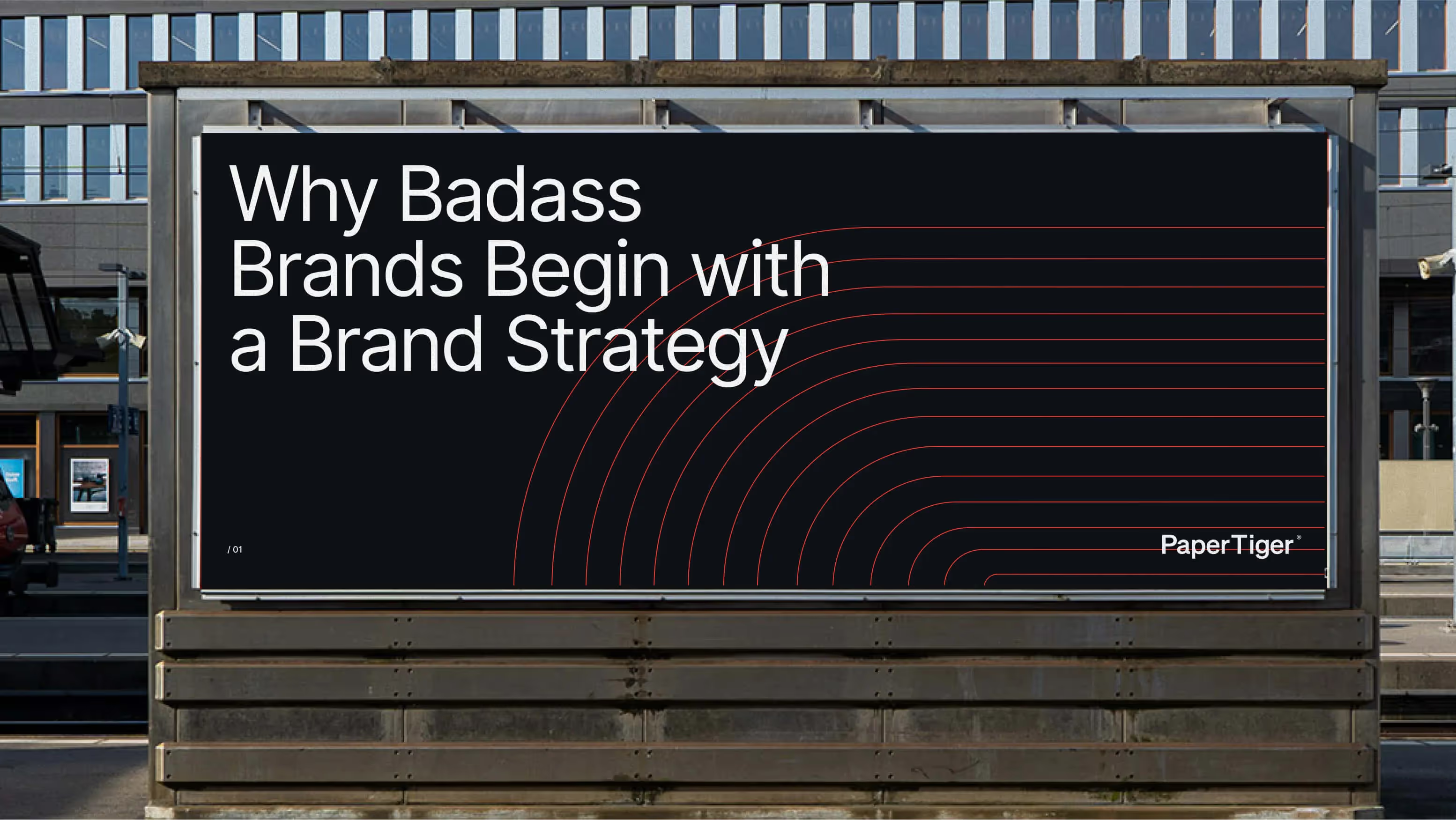
Every website or visual identity project we run starts with the same observation: the engagements that go smoothly are the ones where the client showed up prepared, and the ones that struggle are almost always the ones where foundational questions haven't been answered yet.
This isn't a knock on clients. Most of the people who hire us are running a company, not a brand exercise, and the gaps usually only become visible once design work is on the table. But there's a real cost to figuring it out mid-project. Timelines slip. Stakeholders surface late with veto power. The design phase quietly turns into a strategy phase, and the work everyone is paying for gets pushed to the end with less time and a tighter budget.
You'll save time, money, and a lot of internal friction if you work through the following before you start talking to agencies. None of this requires a strategy firm. Most of it just requires a couple of focused conversations with the right people internally.

Know who you actually compete with
Not who you wish you competed with, and not the brands you admire. The companies your prospects are weighing you against in the moment they're making a decision. These are usually less glamorous than the comparison set most teams default to, and they're more useful.
Look at three to five real competitors and notice what they sound like, how they position themselves, and what they're claiming. You don't need a formal analysis. You need enough familiarity to articulate where you're meaningfully different. If everyone in your category is saying the same thing in the same tone, that's a gift. It means there's open territory if you can name it.
Be able to answer "what do you do" in plain English
Without buzzwords. Without a 90-second preamble. In one or two sentences a person outside your industry could repeat back to a friend.
This is the question that trips up the most teams, especially in technical or enterprise B2B categories where the offering is genuinely complex. The instinct is to add more words to compensate for the complexity. The better move is to find the simplest true version of what you do and let the rest of the site fill in the detail. If the leadership team can't agree on this in a room together, that's a sign the work needs to happen before the design work starts, not during it.
Get internal alignment on what the brand is for
Mission, vision, values, the why behind the company, whatever language you prefer. The point is that someone, ideally a small group of senior stakeholders, has put a stake in the ground and agreed on what the brand stands for and where it's going.
You don't need a formal brand strategy document for this. You need rough consensus among the people who'll have approval power on the project. The version where this isn't done in advance looks like a homepage mockup that triggers a three-week debate about company values, which is a frustrating and expensive way to have that conversation.
Decide who has approval power, and who doesn't
This one is unglamorous and almost always underestimated. Before kickoff, identify the small number of people who genuinely need to weigh in, and clarify what kind of input you want from everyone else.
The pattern that derails projects isn't a tough stakeholder. It's the seventh stakeholder who shows up in week four with strong opinions and the authority to act on them. Decide upfront how feedback gets consolidated internally and who's responsible for delivering it. Your agency can't fix this from the outside.
Know what content you have and what you'll need
Photography, copy, case studies, video, customer logos, product screenshots, anything visual or written that the new site or brand will need to live on. Take stock of what exists and what doesn't.
If you don't have it, decide whether you're producing it or whether the agency is. Both are valid answers. The expensive answer is "we'll figure it out as we go," because content production tends to be slower and more political than people expect, and a beautifully designed site with placeholder copy isn't a launched site.
Be honest about what success looks like
Most projects have at least three definitions of success floating around, usually held by different people. The CEO wants to feel proud of it. The marketing lead wants leads. The product team wants the demo flow to work. None of these are wrong, but they pull in different directions, and the design partner can't optimize for all of them equally.
Sort this out before kickoff. Even an imperfect ranking of priorities is more useful than three competing definitions held loosely.
The bottom line
Clients who arrive with these answers in hand consistently get better work, faster, and with less rework. The agency can spend its time on the things only the agency can do, and the project moves at the pace everyone wants it to move at. None of it is glamorous prep work. All of it pays for itself in the first month of an engagement.
If you're getting ready to start a project and most of these feel unresolved, that's worth knowing before you sign anything. A good partner will tell you the same.
Related Posts
.avif)
it starts with a conversation
Don’t hesitate to contact us. We aim to provide value to everyone who does.